

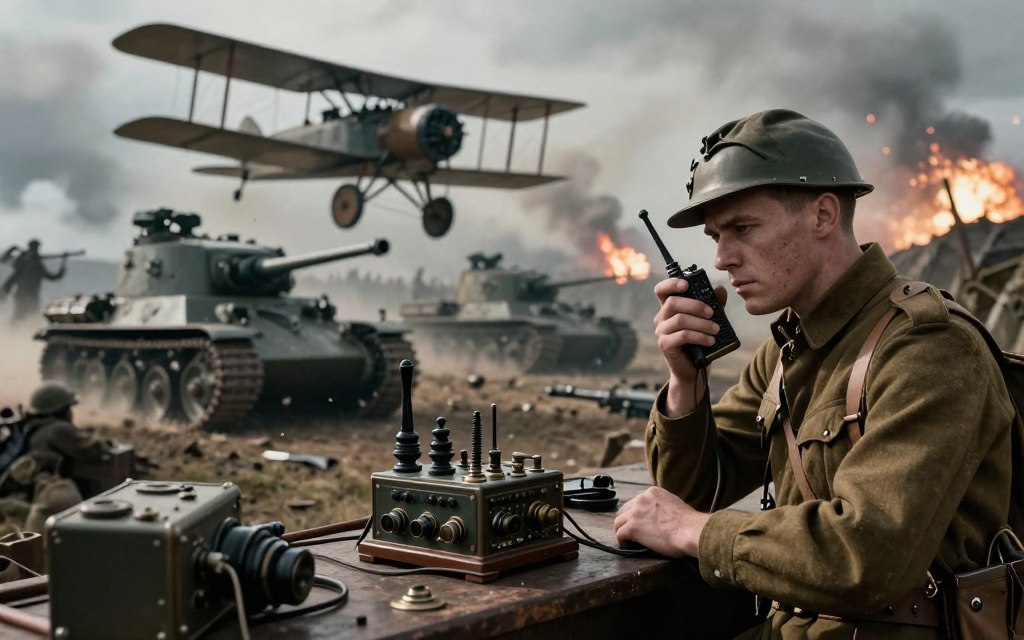
World War I marked a major turning point in military history, driven by industrial production, scientific research, and modern engineering. This article asks: how did technology affect World War 1? It examines World War I technology, including machine guns, artillery, chemical agents, tanks, aircraft, submarines, and communication systems.
Many people think innovations made warfare more efficient, but they increased battles’ scale, speed, range, and destructive power. These advances opened new avenues for reconnaissance, rescue operations, logistics, and battlefield medicine. Military technology in World War I spanned pre-1914 innovations and wartime adaptations, shaping World War II and modern military strategies.
Key Takeaways
- World War I introduced significant advancements in military production and engineering.
- Innovations included machine guns, tanks, and chemical weapons.
- These advancements increased the scale and destructiveness of warfare.
- New technologies improved logistics and battlefield medicine.
- Distinguishing pre-war and wartime innovations is essential for understanding their impact.
The Dawn of Modern Warfare: Technology Before 1914
Before 1914, many technological advances prepared nations for the conflicts of World War I. The Industrial Revolution transformed military power, as factories produced rifles, shells, uniforms, and other supplies in unprecedented quantities. Steelmaking, chemical manufacturing, and steam power created more reliable weapons and larger armies.
Industrial Revolution’s Military Legacy
The Industrial Revolution’s legacy appears in military industrialization and the military technologies developed before the war. Breech-loading rifles and smokeless powder changed combat, while repeating firearms increased firepower. Railways and telegraphs revolutionized troop movement and communication.
Steel warships also emerged during this period, strengthening naval power. These advances in pre-1914 military technology greatly influenced military planning and strategy.
The Arms Race Among European Powers
As nations expanded their forces, a European arms race grew. Germany, Britain, France, Russia, and Austria-Hungary invested heavily in military expansion. The competition was fiercest in naval construction, especially between Britain and Germany over battleships.
The growth of conscription and mobilization plans showed these nations’ urgency. Governments believed technological superiority would bring swift victories. Yet defensive firepower, mass armies, and industrial logistics created a prolonged conflict.
| Country | Military Expenditure (1914) | Naval Strength | Key Innovations |
|---|---|---|---|
| Germany | $1.5 billion | High | U-Boats |
| Britain | $2 billion | Highest | Dreadnoughts |
| France | $1.2 billion | Moderate | Artillery Advances |
| Russia | $1 billion | Moderate | Railway Logistics |
| Austria-Hungary | $0.8 billion | Low | Infantry Weapons |
For more insight into technology’s influence on warfare, visit this link.
How Did Technology Affect World War 1: A Comprehensive Overview
How did technology affect World War 1? Its impact reached battlefield tactics and civilian life. Nations moved from traditional combat toward industrial warfare and mechanized warfare.
Related Posts:
- How Technology Drives Economic Growth, Productivity,…

- Educational vs. Instructional Technology: What’s the…

- Which Cars Have the Most Advanced Technology?…

- Unveiling What is IQ.Drive Technology? Your…

- What Are the Benefits of Modern Technology Key Advantages

- What Is Cree LED Technology High-Efficiency Lighting…

Industrial Scale of Combat
During World War I, industrial warfare became clear as factories made huge quantities of weapons and supplies. This production equipped millions of soldiers, while demand surged for artillery shells, rifles, machine guns, uniforms, and medical materials. Mass production sustained long battles because the war lasted for years.
Countries created national resource systems to manage war logistics. The table below shows the types of materials produced and their importance:
| Material | Purpose | Quantity Produced |
|---|---|---|
| Artillery Shells | Primary weapon for long-range attacks | Over 300 million |
| Rifles | Standard infantry weapon | More than 20 million |
| Machine Guns | Defensive and offensive firepower | Over 100,000 |
| Uniforms | Standardized soldier attire | Millions produced |
The Shift from Traditional to Mechanized Warfare
The shift toward mechanized warfare changed combat strategies. Trench warfare replaced cavalry charges and close-quarters maneuvers; soldiers faced machine-gun defenses and heavy artillery. Motor vehicles and armored tanks became vital, expanding the battlefield beyond foot soldiers.
The war was not entirely mechanized. Soldiers still fought on foot, and horses remained essential for transport. Yet industrial technology changed battles, making coordination, supply, and firepower key elements of success.
World War I’s defining innovation was not one invention but a continuous industrial method of combat. This change laid the groundwork for modern battlefield technology and forever altered warfare.
Weapons That Transformed the Battlefield
World War I weapons changed warfare by introducing new tools and methods. These advances changed battle tactics, from machine guns and artillery to chemical warfare.
Machine Guns and Rapid-Fire Arms
One major advance was the Maxim gun, a powerful machine gun. Small defensive units could release intense fire, making open ground dangerous for infantry. Machine guns in WWI encouraged trench systems, as soldiers sought shelter from constant bullets.
Improved rifles and hand grenades became vital during close combat. Mortars let troops launch explosive fire from a distance. Together, these weapons made cover and coordinated attacks more important.
Heavy Artillery and Long-Range Guns
Heavy artillery World War I weapons caused a large share of battlefield casualties. Long-range guns could destroy trenches, roads, and fortifications from far away. Constant shelling from hidden positions deeply frightened enemy soldiers.
Artillery introduced indirect fire, which let gunners target places they could not see. This method required careful observation, coordination, and a steady supply of shells. Destroying defenses before an assault changed tactics and troop movements.
Chemical Weapons and Gas Warfare
Chemical warfare in World War I brought deadly agents such as chlorine, phosgene, and mustard gas. These weapons caused chaos, proved hard to control, and forced soldiers to wear protective gear. Gas did not replace regular artillery, but armies developed countermeasures such as gas masks.
Gas attacks created fear because the enemy could not be seen. This fear could weaken troop morale. Gas masks and other defenses showed why armies needed new ideas and strategies.
Tanks and Armored Fighting Vehicles
As the war continued, WWI tanks became a powerful new force. Built to cross trenches and crush obstacles, they protected crews from small-arms fire. Early tanks had mechanical failures, slow speeds, and poor visibility.
Despite these limits, tanks changed ground combat. They helped troops break through enemy lines and forced leaders to change tactics. Armored fighting vehicles combined mobility and firepower, marking a major change in warfare.
World War I weapons changed both the battlefield and military strategy. These innovations forced changes in tactics, fortifications, and training. Each weapon shaped combat and influenced future conflicts.
The Rise of Military Aviation
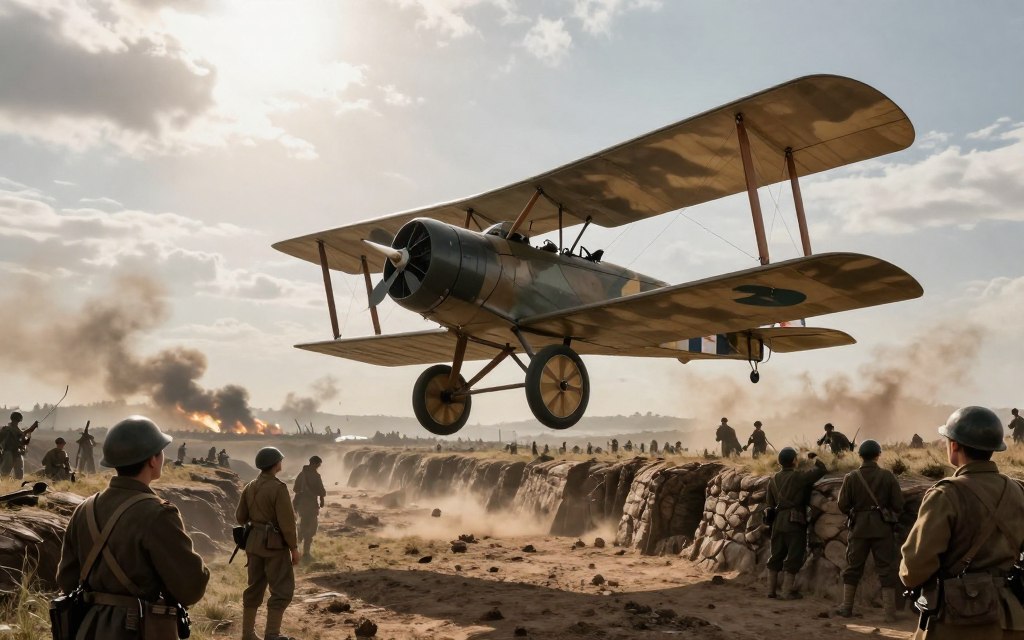
Military aviation in World War I changed battlefield strategy. Initially, aircraft supported reconnaissance missions, helping commanders gather intelligence from above. As technology advanced, aviation took on a larger role in warfare.
Fighter Planes and Aerial Dogfights
WWI fighter planes became a key part of military aviation. At first, planes had no weapons and mainly supported observation. Then, synchronized firing systems and stronger engines made air-to-air combat possible.
This created the “ace,” a pilot credited with multiple aerial victories. Public fascination turned these pilots into heroes, though dogfights formed only one part of their military role.
Strategic Bombing Capabilities
Strategic bombing World War I marked a new stage in aerial warfare. Early raids targeted military installations, ports, and railways to disrupt enemy supply lines. Although bombing accuracy stayed limited, these missions began attacks on enemy territory, a concept that later evolved greatly in other conflicts.
Aerial Reconnaissance and Photography
Aerial reconnaissance WWI changed military intelligence in major ways. Aircraft cameras gave commanders a broader view of enemy positions, troop movements, and supply routes. These photographs helped plan offensives and adjust artillery fire, adding speed and height to observation once based on ground intelligence.
| Aspect | Impact | Technology Used |
|---|---|---|
| Fighter Planes | Enabled air-to-air combat | Synchronized firing systems |
| Strategic Bombing | Targeted enemy infrastructure | Bombers and airships |
| Aerial Reconnaissance | Enhanced battlefield intelligence | Cameras mounted on aircraft |
Naval Power and Submarine Warfare
Naval technology World War I changed military strategy and control of vital sea lanes. Growing fleets helped nations protect supplies and move resources across the oceans. This section examines Dreadnought battleships, German U-Boats, and innovations in submarine warfare WWI.
Dreadnought-Class Battleships
Dreadnought battleships brought a revolutionary change to naval warfare. These steam-powered ships carried heavy armor, large-caliber guns, and advanced fire-control systems. Their design stressed speed and firepower, making them symbols of national strength.
Britain and Germany raced to build stronger fleets, increasing their rivalry. Although major battleship clashes were limited, control of sea lanes remained vital. Dreadnoughts carried troops, food, fuel, and raw materials across the oceans.
German U-Boat Campaigns
German U-Boats added a new dimension to naval warfare. These submarines attacked merchant ships and sought to weaken Britain through economic blockade. Unrestricted submarine warfare threatened neutral shipping and helped influence the United States’ decision to enter the war.
U-Boats relied on stealth and could strike without warning. However, these attacks raised ethical concerns and sparked debates about rules of engagement at sea.
Anti-Submarine Technology and Convoys
Allied forces answered the U-Boat threat with new anti-submarine technology. These tools included destroyer escorts, depth charges, and hydrophones that detected submarines. The convoy system World War I adopted grouped merchant ships with naval escorts, improving their safety.
Coordinated naval patrols and better detection sharply reduced German U-Boats’ effectiveness. These lessons showed the lasting importance of undersea warfare and maritime logistics in future conflicts.
| Naval Technology | Key Features | Impact on Warfare |
|---|---|---|
| Dreadnought Battleships | Heavy armor, large-caliber guns, advanced propulsion | Shifted naval power dynamics, emphasized sea control |
| German U-Boats | Stealth capabilities, economic blockade strategies | Introduced new tactics, affected neutral nations |
| Anti-Submarine Technology | Depth charges, hydrophones, destroyer escorts | Reduced U-Boat effectiveness, enhanced merchant safety |
Communication Systems on the Front Lines
World War I communication technology helped military operations work effectively. Relaying orders and gathering intelligence helped leaders coordinate attacks and defenses. As technology advanced, new methods changed battlefield strategies.
Field Telephones and Wired Networks
Field telephones WWI connected trenches, headquarters, artillery batteries, observation posts, and supply centers. These wired networks supported real-time communication and helped commanders make quick decisions. Damaged wires, enemy interception, and artillery fire made repairs difficult and systems vulnerable.
Wireless Radio Technology
Wireless radio in WWI allowed communication without physical cables. It helped ships, aircraft, and mobile units, but early equipment was bulky and hard to operate. Interception limited radios in critical situations, so units used runners, signal lamps, flags, and pigeons.
Cryptography and Code Breaking
Military cryptography World War I helped secure communications. Coded messages, call signs, and signal procedures protected sensitive information. Intelligence services analyzed enemy communications to learn about their plans.
Poor message security could reveal military strategies. This showed the need for trained personnel and standardized procedures. Effective communication needed more than technology, including rapid interpretation of information.
Transportation and Logistics Advances
Advances in World War I transportation helped armies sustain military operations. New methods changed how armies moved troops and supplies. This section examines railway networks, motorized transport, and supply chain innovations.
Railway Networks and Troop Movement
Railways formed the backbone of railway logistics WWI. They moved soldiers, artillery, ammunition, food, and medical supplies across vast distances. Timetables and railway hubs helped coordinate troops and ensure timely deliveries.
Mobilization plans linked ports, factories, depots, and front lines for efficient transport. This network helped armies send reinforcements and supplies quickly, supporting combat effectiveness. Railways showed how logistics could affect battle outcomes.
Motorized Transport and Trucks
As the war continued, military trucks in World War I became more important. They joined railways and horse-drawn vehicles, especially when moving supplies from railheads to trenches. Yet mud, shell damage, fuel shortages, and poor roads often slowed operations.
Mechanical breakdowns made logistics harder and showed the need for reliable transport systems. Despite these limits, motor vehicles created faster and more flexible supply routes.
Supply Chain Innovations
World War I also brought organized methods for managing wartime supply chains. Armies improved inventory management, ammunition distribution, fuel allocation, and battlefield resupply. These changes helped commanders sustain offensives.
However, complex networks also created weaknesses. Enemy attacks could severely disrupt supply lines and weaken combat readiness. The side with better production, transportation, and distribution could maintain combat power under difficult conditions.
| Logistics Aspect | Importance | Challenges |
|---|---|---|
| Railway Networks | Fast troop and supply movement | Timetable coordination |
| Motorized Transport | Flexible supply routes | Road conditions and breakdowns |
| Supply Chain Management | Efficient resource allocation | Vulnerability to disruptions |
Medical Technology and Casualty Care
World War I medical technology changed casualty care and saved countless lives. Battlefield conditions drove new medical practices and improved injured soldiers’ chances of survival.
One major advance involved battlefield surgery and triage. Battlefield surgery WWI teams worked from organized casualty stations, where staff treated wounded soldiers quickly.
Evacuation routes and ambulance services gave wounded soldiers faster access to care. Antiseptic procedures, X-rays, and refined surgical techniques improved injury treatment.
Triage ranked patients by urgency and likelihood of survival. It helped teams use limited resources and give immediate care to those in dire need.
Another major advance involved blood transfusion practices. During World War I, doctors improved blood typing, storage, and anticoagulant use. Blood transfusions in World War I helped treat severe blood loss from artillery wounds. Transfusions during surgery and emergencies changed trauma medicine and improved outcomes for many soldiers.
The war also drew attention to mental health treatment for shell shock. Bombardment and combat caused deep psychological harm, now linked to post-traumatic stress disorder (PTSD). Shell shock treatment ranged from rest and therapy to harsh, punitive measures.
These responses showed limited mental-health knowledge but supported later progress in psychological care.
Medical technology from World War I improved casualty care and created emergency systems. These trauma-care practices influenced military and civilian healthcare for years.
The Lasting Legacy of WWI Technology
The legacy of World War I technology still shapes modern military practices. The war introduced strategies and equipment that changed how armies fought. These WWI military lessons shaped later conflicts and military doctrine.
One of the key strategic and tactical lessons learned was the need for combined arms operations. Infantry, artillery, and air support had to work together, while armies needed mobility and adaptability. Ignoring machine guns, artillery, and barbed wire often caused devastating losses.
Strategic and Tactical Lessons Learned
- Combined arms operations for effective engagement
- Artillery coordination to maximize firepower
- Air-ground cooperation for reconnaissance and support
- Secure communications for operational success
- Logistical planning to sustain prolonged engagements
The influence on World War II was profound, showing the World War I influence on World War II. Nations developed faster tanks, improved aircraft, and advanced submarines from WWI experiences. During the interwar period, debates about these innovations created doctrines that shaped the next global conflict.
Influence on World War II
- Faster and more powerful tanks
- Enhanced aircraft capabilities for strategic bombing
- Advanced radio technology for better communication
- Development of radar and anti-aircraft systems
- Innovations in mechanized formations
Lastly, the foundations of modern military technology trace back to World War I. These modern military technology origins include armored warfare, military aviation, and electronic communication. These advances paved the way for modern intelligence gathering and battlefield medicine.
Foundations of Modern Military Technology
- Armored warfare strategies
- Naval aviation advancements
- Electronic communication systems
- Intelligence gathering techniques
- Innovations in battlefield medicine
Technology played a major role, but leadership, training, and strategic decisions also shaped outcomes. Understanding the legacy of World War I technology remains vital to understanding modern warfare.
Conclusion
The impact of technology on World War I was profound and transformative. Industrial production expanded armies and sustained prolonged combat, marking a major shift in warfare. Machine guns and heavy artillery increased defensive firepower, causing devastating trench warfare.
Chemical weapons created new dangers, while tanks challenged trench systems’ static nature.
A World War I warfare summary shows how aircraft revolutionized reconnaissance and air combat. They provided strategic advantages that had once seemed unimaginable, while submarines threatened global shipping routes. Enhanced communication systems improved command and intelligence; railways and motorized transport supported mass logistics, moving troops and supplies efficiently to front lines.
Medical innovations improved casualty care and met wounded soldiers’ urgent needs. Technological change in warfare had a paradox: industrial systems improved communication and organized transportation but also caused unprecedented destruction. World War I marked the shift from traditional warfare to integrated industrial and mechanized combat.
The technology developed in World War I laid the groundwork for future conflicts. Lessons from this era shaped World War II and helped build modern defense, communications, transportation, intelligence, and battlefield medicine. Understanding how technology reshaped WWI helps us appreciate warfare’s complexities and the continuous evolution of military strategy.